
Fresh or Dried Garlic for Pickle Manufacturing? Cost & Formulation Guide
Published 7 September 2026 · Updated 16 July 2026 · By Dehydrated Veg

Table of Contents
- Traditional vs Modern Pickle Manufacturing
- Cost Analysis: Fresh vs Dehydrated Garlic in Pickle Manufacturing
- Use Case: How Switching Impacts Batch Consistency & Production Efficiency
- Which Garlic Form Suits Pickle Manufacturing?
- Formulation Guidance by Pickle Type
- Dehydrated vs Freeze-Dried Garlic for Pickle Production
- Pickle Industry Market Context
- Export Considerations for Pickle Manufacturers
- Regional Pickle Styles & Ingredient Implications
- Other Dehydrated Vegetables Used in Pickle Manufacturing
- Packaging Options
- Food Safety & Regulatory Considerations
- Quality Control & Lab Testing
- Common Sourcing Mistakes to Avoid
- Technical Specifications
- Key Takeaways
- B2B Sourcing Information - Dehydrated Garlic for Pickle Manufacturing
- Frequently Asked Questions
- Is fresh or dehydrated garlic better for pickle manufacturing?
- Which form of dehydrated garlic is best for pickle manufacturing - chopped, minced or flakes?
- Does using dehydrated garlic affect pickle shelf life?
- How much dehydrated garlic should I use compared to fresh garlic in a pickle formulation?
- What is the minimum order quantity (MOQ) for dehydrated garlic for pickle manufacturing?
- What other dehydrated vegetables are used in pickle manufacturing besides garlic?
- Do you provide free samples for pickle manufacturers to test in a formulation?
- Is dehydrated garlic suitable for both mustard-oil and sesame-oil pickle bases?
- Article By Dehydrated Veg
- You may also like
- Discuss about post
Pickles - achaar - are an integral part of South Asian cuisine, made from fruit or vegetable pieces matured in an oil or brine base with a spice mix. For pickle food technologists and procurement managers evaluating raw material sourcing, the choice between fresh and dehydrated garlic is one of the most consequential decisions in the formulation, directly affecting cost predictability, batch consistency, shelf life and production efficiency. This guide compares fresh and dehydrated garlic for pickle manufacturing on cost, consistency and shelf life, walks through formulation guidance by pickle type, and covers the wider dehydrated vegetable ingredients pickle manufacturers commonly source alongside garlic.
This is written specifically for the buyer evaluating a raw-material switch, not for a home cook - if you’re scaling from a fresh-garlic recipe toward a formal, repeatable production process, or specifying ingredients for the first time as a new pickle brand, the cost, formulation and sourcing sections below are built to answer the questions that come up at that stage.
Traditional vs Modern Pickle Manufacturing
Traditionally, pickles were manufactured with freshly chopped fruits and vegetables, hand-mixed with homemade spice blends. Unless thoroughly sun-dried before mixing, these traditional-process pickles carried a short shelf life and batch-to-batch variation driven by whatever fresh produce was available that week.
Modern pickle manufacturers increasingly use dried and packed ingredients - dehydrated garlic flakes, chopped or minced garlic chief among them - as a primary raw material. This shift is driven by three commercial factors: dehydrated garlic is available year-round independent of fresh-garlic growing seasons, it introduces far less moisture into the oil or brine base (supporting more consistent shelf life), and it removes the peeling and chopping labour that scales poorly on a production line.
This shift mirrors a broader pattern across processed food manufacturing generally: as production scales from a home-kitchen or small-batch process to a repeatable, audited manufacturing line, raw materials with a fixed, documented specification become more valuable than raw materials chosen purely for taste, because consistency and traceability become production requirements in their own right, not just nice-to-haves.
Cost Analysis: Fresh vs Dehydrated Garlic in Pickle Manufacturing
A fair cost comparison between fresh and dehydrated garlic has to look beyond the raw per-kilogram purchase price to the full landed cost of using each in a production line:
| Cost Factor | Fresh Garlic | Dehydrated Garlic |
|---|---|---|
| Procurement | Subject to seasonal price spikes; sourced fresh per batch | Stable, contracted pricing; sourced in bulk lots |
| Storage | Cold or ventilated storage required; short usable window | Ambient, cool & dry warehouse; 12-month shelf life |
| Labour | Peeling and chopping labour per batch | Ready to use - no peeling or chopping |
| Wastage | Sprouting, mould, peel waste, spoilage between batches | Near-zero wastage; used as needed from a stable-shelf-life stock |
| Batch Consistency | Varies with crop, season and supplier | Consistent moisture, particle size and flavour per specification |
| Moisture Contribution to Base | Higher - can affect brine/oil ratio and shelf life | Lower (4-5% moisture) - more predictable base chemistry |
For a manufacturer running continuous batches, the labour, wastage and storage savings from dehydrated garlic typically outweigh any difference in raw per-kilogram pricing - and the consistency benefit reduces the batch-to-batch rework that inconsistent fresh garlic can cause in a QA-controlled process. Request a formal quote against your specific volume to get an exact landed-cost comparison rather than relying on generic industry figures.
Use Case: How Switching Impacts Batch Consistency & Production Efficiency
Pickle manufacturers who move from fresh to dehydrated garlic typically report three operational changes: first, batch-to-batch flavour consistency improves, since dehydrated garlic is processed and specified to a fixed moisture, size and pungency profile rather than varying with each fresh delivery. Second, production scheduling becomes more flexible, since dehydrated garlic doesn’t need to be used within days of delivery the way fresh garlic does - a 12-month shelf life means raw material planning can decouple from fresh-produce delivery schedules. Third, shelf life of the finished pickle itself can improve, since less incidental moisture enters the oil or brine base from the garlic component.
The trade-off manufacturers should test before switching: dehydrated garlic needs to rehydrate within the pickle’s oil or brine base over its maturation period, so the exact quantity and particle size (chopped vs minced) should be validated in a trial batch rather than assumed to be a direct 1:1 substitution for fresh garlic by weight.
A practical rollout path most manufacturers follow: run a single trial batch alongside your existing fresh-garlic control batch, compare flavour development at the same maturation checkpoints (typically 1, 2 and 4 weeks in), and only commit full production volume to dehydrated garlic once the trial batch has matured through a complete cycle and passed your own internal taste and shelf-life review.
Which Garlic Form Suits Pickle Manufacturing?
Chopped (3-5mm) and minced (1-3mm) dehydrated garlic are the two forms most commonly used in pickle manufacturing, since a visible piece of garlic and a stronger, slower-released flavour are usually wanted in the finished pickle. Garlic flakes (3-5mm) are occasionally used where a coarser, more rustic texture is the goal. Garlic powder is rarely used as the primary garlic ingredient in pickle manufacturing itself, since it disperses into the base rather than remaining as a visible piece - though it may appear in a masala or spice-coating layer applied separately.
Formulation Guidance by Pickle Type
| Pickle Type | Suggested Garlic Form | Notes |
|---|---|---|
| Oil-based garlic pickle (garlic as main ingredient) | Chopped or minced | Rehydrates in oil over maturation; garlic remains the visible star ingredient |
| Mixed vegetable pickle | Minced | Blends evenly with other chopped vegetables without dominating texture |
| Mango, lime or chilli pickle (garlic as supporting flavour) | Chopped, smaller quantity | Garlic supports rather than leads the flavour profile |
| Sauce-style or paste pickle | Minced or powder blend | Finer particle size integrates into a smoother base |
These are starting-point suggestions, not fixed rules - exact quantity, form and rehydration time should be validated against your own recipe and maturation process using a trial batch and a free sample before scaling to full production.
Dehydrated vs Freeze-Dried Garlic for Pickle Production
Freeze-dried garlic retains a texture and rehydration profile closer to fresh garlic, but at a meaningfully higher cost per kilogram due to its more energy- and time-intensive processing method. For most pickle manufacturing - where the garlic sits in an oil or brine base for an extended maturation period and has time to rehydrate naturally - hot-air dehydrated garlic delivers a comparable end result at a lower landed cost, which is why it is the more common industry choice for pickle production at commercial scale. Freeze-dried garlic is more commonly reserved for premium, fast-turnaround product lines where minimal rehydration time is a specific selling point.
Pickle Industry Market Context
India’s pickle (achaar) manufacturing industry spans both large branded FMCG players and a long tail of regional and artisanal manufacturers, supplying both the domestic market and a growing export trade to South Asian diaspora communities in the Middle East, UK, USA and Southeast Asia. Garlic is one of the highest-volume ingredients across this industry, alongside onion, mango, lime and chilli, which is why consistent, contracted-price raw material sourcing - rather than exposure to fresh produce market volatility - is increasingly a competitive factor for manufacturers scaling production or supplying export contracts with fixed delivery pricing.
As demand grows for shelf-stable, export-ready condiments generally, pickle manufacturers scaling beyond regional distribution face a specific sourcing challenge: fresh garlic supply chains are typically local and seasonal, which doesn’t scale cleanly to a manufacturer supplying multiple states or export markets year-round. Dehydrated garlic, sourced under a fixed specification and packed for long-distance freight, removes that geographic and seasonal constraint - a meaningful factor for any pickle brand planning to scale beyond its home region.
Export Considerations for Pickle Manufacturers
Pickle manufacturers exporting their finished product, as well as those importing dehydrated garlic as a raw material, both need to navigate HS code classification for customs purposes. Dehydrated garlic used as a raw material input is commonly classified under HS Code 0712.90.20 (dried garlic) within Chapter 7 - Dried Vegetables of the Harmonized System; the finished pickle product itself falls under a different HS heading specific to prepared vegetables/condiments (typically within Chapter 20), which your export documentation team or customs broker can confirm for your specific product and destination market. If you’re newly exporting, it’s worth confirming both classifications early, since raw material and finished product duties can differ meaningfully by destination country.
Regional Pickle Styles & Ingredient Implications
Pickle formulation varies notably by region, and that variation has real implications for raw material sourcing. North Indian pickles typically use mustard oil as the base, while South Indian pickles more commonly use sesame oil - both bases behave differently with dehydrated ingredients, since oil type affects rehydration speed and long-term flavour infusion. Despite using largely the same core ingredients - garlic, chilli, mustard seed, salt - preparation technique and maturation period vary enough between regional styles that a garlic form and quantity validated for one recipe should still be re-tested when adapting to a different regional formulation. Manufacturers producing multiple regional product lines from a shared ingredient base often standardise on dehydrated garlic specifically because its consistent specification makes recipe-to-recipe scaling more predictable than working with fresh garlic of varying moisture and pungency.
Other Dehydrated Vegetables Used in Pickle Manufacturing
Garlic is rarely the only dehydrated ingredient in a pickle formulation. Dehydrated Veg also supplies dehydrated onion (chopped or minced), dried red and green chillies, dehydrated ginger, and various dried herbs and spices commonly used alongside garlic in pickle bases - sourcing all of these from a single supplier can simplify quality control and reduce the number of vendor relationships a pickle manufacturer needs to manage.
Packaging Options
Standard packaging for dehydrated garlic is a 25kg moisture-proof polybag with an inner liner, sized for continuous production use. Dehydrated Veg also offers custom pack sizes and custom mesh or particle size processing - useful for manufacturers who want a specific garlic cut size that matches a signature recipe rather than a generic industry-standard size. Share your target cut size and pack format with our export team when requesting a sample, so a matched quote can be prepared alongside your trial batch.
Food Safety & Regulatory Considerations
Pickle manufacturers supplying branded retail or export markets typically need to document raw material traceability and food safety compliance as part of their own FSSAI licensing and any buyer-side audits. Sourcing dehydrated garlic and other dried vegetables from a certified supplier - rather than an unregistered fresh-produce vendor - simplifies this documentation trail: Dehydrated Veg’s garlic range is manufactured under FSSAI approval and ISO certification, with a Certificate of Analysis available per batch covering moisture, ash content and microbial parameters, which most pickle manufacturers can fold directly into their own raw-material intake records.
Quality Control & Lab Testing
Every batch of dehydrated garlic is checked at multiple stages before dispatch: raw garlic is inspected on arrival for size and quality, moisture is monitored through the drying cycle, and the finished product passes through colour sorting and metal detection before packing. On request, we issue a Certificate of Analysis (CoA) with each batch, so your quality assurance team can verify the shipment against your internal specification before it enters your pickle production line, and file the documentation alongside your own batch records.
Common Sourcing Mistakes to Avoid
-
Assuming a 1:1 substitution ratio with fresh garlic - dehydrated garlic is concentrated and needs to rehydrate in your oil or brine base; validate the exact quantity in a trial batch rather than assuming direct substitution by weight.
-
Skipping the trial-batch stage - rehydration behaviour and flavour release in a pickle base can vary by particle size and crop season; always test a free sample in a small trial batch before scaling to full production.
-
Choosing the wrong particle size for the pickle style - chopped and minced suit most pickle formulations; flakes or powder are less common choices and can change the texture buyers expect from a given pickle style.
-
Not confirming certifications match your own compliance needs - if you’re supplying export markets, confirm Halal, Kosher or other specific certifications are current and match your destination market’s requirements before finalising a supply contract.
Technical Specifications
| Parameter | Specification |
|---|---|
| Forms | Chopped (3-5mm), Minced (1-3mm), Flakes (3-5mm), Powder, Granules |
| Raw Material | Fresh garlic, no preservatives or additives |
| Moisture Content | Approx. 4-5% |
| Colour, Taste & Aroma | Creamish white, typical of garlic |
| Shelf Life | 12 months from date of manufacture |
| Storage | Cool, dry place below 20°C, in a closed warehouse |
| Packaging | 25kg polybag with inner liner |
| MOQ | 25kg trial order, 100kg+ for bulk and export orders |
| Certifications | FSSAI Approved, ISO Certified, Halal, Kosher, Spices Board of India, APEDA Registered, FIEO Member |
| Country of Origin | India |
Key Takeaways
-
Dehydrated garlic reduces cost volatility, wastage and labour versus fresh garlic in pickle manufacturing, with a 12-month shelf life and consistent moisture and flavour per batch.
-
Chopped (3-5mm) and minced (1-3mm) are the garlic forms most used in pickle production, chosen for visible texture and slow flavour release in an oil or brine base.
-
Hot-air dehydrated garlic delivers comparable results to freeze-dried garlic in pickle manufacturing at a lower landed cost, since the maturation period gives it time to rehydrate naturally.
-
MOQ starts at 25kg for a trial order, scaling to 100kg+ for bulk and export orders, with free samples available for trial-batch testing.
-
Certifications include FSSAI, ISO, Halal, Kosher, Spices Board of India and APEDA registration - useful documentation for a pickle manufacturer’s own compliance and export requirements.
-
Validate any formulation change with a trial batch against your existing fresh-garlic control batch before committing full production volume.
B2B Sourcing Information - Dehydrated Garlic for Pickle Manufacturing
-
Minimum Order Quantity: 25kg for a trial order, 100kg+ for bulk and export orders
-
Pack Size: 25kg polybag with inner liner
-
Shelf Life: 12 months from date of manufacture
-
Storage: Cool, dry place below 20°C, in a closed warehouse
-
Certifications: FSSAI Approved | ISO Certified | Halal | Kosher | Spices Board of India | APEDA Registered | FIEO Member
-
Lead Time: Immediate dispatch for stock items, or as per customer requirement
-
Sampling: Free samples available for trial-batch testing - contact our export team
-
Customisation: Custom mesh/particle size available on request
Request Free Sample Get Bulk Quote & Full Specs [Talk to Our Export Team](https://wa.me/919944088168?text=Hello! I am a pickle manufacturer interested in dehydrated garlic from your website www.dehydratedveg.com.)
Frequently Asked Questions
Is fresh or dehydrated garlic better for pickle manufacturing?
For bulk, continuous pickle production, dehydrated garlic is generally preferred: it removes peeling and chopping labour, carries a 12-month shelf life versus weeks for fresh garlic, and gives consistent flavour and moisture from batch to batch. Fresh garlic can still suit small-batch, artisanal production where its texture is specifically wanted.
Which form of dehydrated garlic is best for pickle manufacturing - chopped, minced or flakes?
Chopped (3-5mm) or minced (1-3mm) garlic is most commonly used in pickle manufacturing, since a visible piece of garlic and a stronger, slower-released flavour is usually wanted in the finished pickle.
Does using dehydrated garlic affect pickle shelf life?
Dehydrated garlic’s low moisture content (4-5%) means it introduces minimal additional water into an oil- or brine-based pickle base, which can support more consistent shelf life and reduce the risk of spoilage compared to using fresh garlic with higher moisture content.
How much dehydrated garlic should I use compared to fresh garlic in a pickle formulation?
Dehydrated garlic is concentrated, so less is typically needed by weight than fresh garlic, plus rehydration in the oil or brine base over the pickle’s maturation period. The exact ratio depends on your specific recipe, so we recommend testing a free sample in a trial batch before scaling to full production.
What is the minimum order quantity (MOQ) for dehydrated garlic for pickle manufacturing?
25kg for a trial order, and 100kg and above for bulk and export orders.
What other dehydrated vegetables are used in pickle manufacturing besides garlic?
Dehydrated onion (chopped or minced), dried red chillies, dehydrated ginger, and various dried herbs and spices are commonly used alongside garlic in pickle formulations.
Do you provide free samples for pickle manufacturers to test in a formulation?
Yes, free samples of dehydrated garlic and other dehydrated vegetables are available on request so pickle manufacturers can test flavour release and rehydration behaviour in their own formulation before committing to a bulk order.
Is dehydrated garlic suitable for both mustard-oil and sesame-oil pickle bases?
Yes, dehydrated garlic works in both mustard-oil (common in North Indian pickle styles) and sesame-oil (common in South Indian pickle styles) bases. Rehydration speed can differ slightly between oil types, so we recommend validating your exact formulation with a trial batch and free sample regardless of which oil base you use.
For bulk supply and export of dehydrated garlic and other dehydrated vegetables - flakes, minced, chopped and powder - reach us at [email protected] or post your requirements on our website. Chat support: [+91 9944088168](https://wa.me/919944088168?text=Hello there! I am interested in one of the products available on your website www.dehydratedveg.com.)
Article By Dehydrated Veg
Dehydrated Veg is a prominent bulk supplier, exporter of Dehydrated Vegetables, Spices products in India. We offer Food Ingredients solutions to pickle companies- onion powder. Garlic Powder, Lemon Powder in India, Dubai.
You may also like
Garlic Flakes vs Powder vs Granules vs Minced vs Chopped
Why Use Dehydrated Garlic Instead of Fresh Garlic?
How To Use Garlic Powder: 5 Ways
View Full Dehydrated Garlic Product Page & Specs
Discuss about post
Please enable JavaScript to view the comments powered by Disqus.
FAQs
Is fresh or dehydrated garlic better for pickle manufacturing?
For bulk, continuous pickle production, dehydrated garlic is generally preferred: it removes peeling and chopping labour, carries a 12-month shelf life versus weeks for fresh garlic, and gives consistent flavour and moisture from batch to batch. Fresh garlic can still suit small-batch, artisanal production where its texture is specifically wanted.
Which form of dehydrated garlic is best for pickle manufacturing - chopped, minced or flakes?
Chopped (3-5mm) or minced (1-3mm) garlic is most commonly used in pickle manufacturing, since a visible piece of garlic and a stronger, slower-released flavour is usually wanted in the finished pickle.
Does using dehydrated garlic affect pickle shelf life?
Dehydrated garlic's low moisture content (4-5%) means it introduces minimal additional water into an oil- or brine-based pickle base, which can support more consistent shelf life and reduce the risk of spoilage compared to using fresh garlic with higher moisture content.
How much dehydrated garlic should I use compared to fresh garlic in a pickle formulation?
Dehydrated garlic is concentrated, so less is typically needed by weight than fresh garlic, plus rehydration in the oil or brine base over the pickle's maturation period. The exact ratio depends on your specific recipe, so we recommend testing a free sample in a trial batch before scaling to full production.
What is the minimum order quantity (MOQ) for dehydrated garlic for pickle manufacturing?
25kg for a trial order, and 100kg and above for bulk and export orders.
What other dehydrated vegetables are used in pickle manufacturing besides garlic?
Dehydrated onion (chopped or minced), dried red chillies, dehydrated ginger, and various dried herbs and spices are commonly used alongside garlic in pickle formulations.
Do you provide free samples for pickle manufacturers to test in a formulation?
Yes, free samples of dehydrated garlic and other dehydrated vegetables are available on request so pickle manufacturers can test flavour release and rehydration behaviour in their own formulation before committing to a bulk order.
Is dehydrated garlic suitable for both mustard-oil and sesame-oil pickle bases?
Yes, dehydrated garlic works in both mustard-oil (common in North Indian pickle styles) and sesame-oil (common in South Indian pickle styles) bases. Rehydration speed can differ slightly between oil types, so we recommend validating your exact formulation with a trial batch and free sample regardless of which oil base you use.
Related Products

Dehydrated Garlic Flakes
Dehydrated Garlic Flakes (3-5mm) for bulk and export buyers. MOQ 25kg, 12-month shelf life, custom mesh sizes available.
View specifications →
Dehydrated Garlic Flakes & Powder
Dehydrated Garlic Flakes and Powder for bulk and export buyers. Forms: Flakes, Powder, Chopped, Minced, Granules. MOQ 25kg, 12-month shelf life, custom mesh sizes available.
View specifications →
Dehydrated Garlic Powder
Dehydrated Garlic Powder, finely ground, for bulk and export buyers. MOQ 25kg, 12-month shelf life, custom mesh sizes available.
View specifications →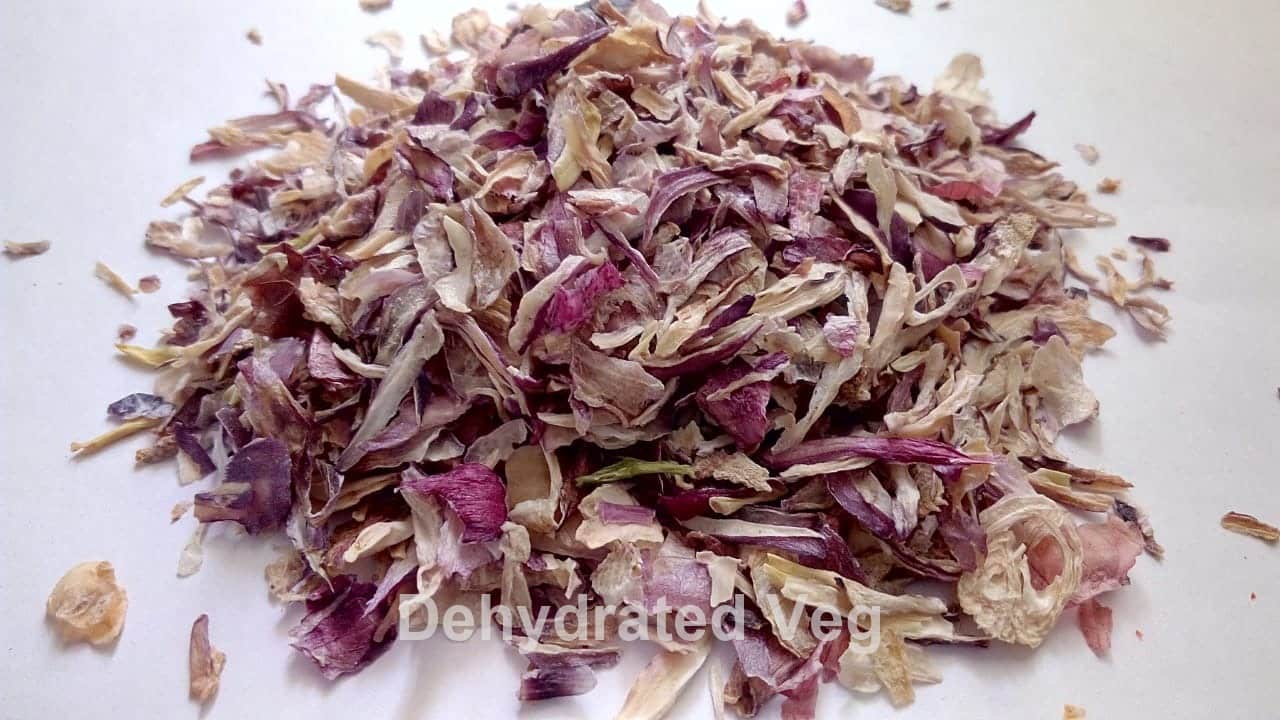
Dehydrated Onion Flakes & Powder
Bulk onion flakes & powder from Dehydrated Veg, India. MOQ 25kgs, 12 Months shelf life. Request a free sample or quote.
View specifications →