
Onion Flakes vs Granules vs Powder: Which Cut Size Should You Buy?
Published 1 August 2026 · Updated 7 August 2026 · By Dehydrated Veg
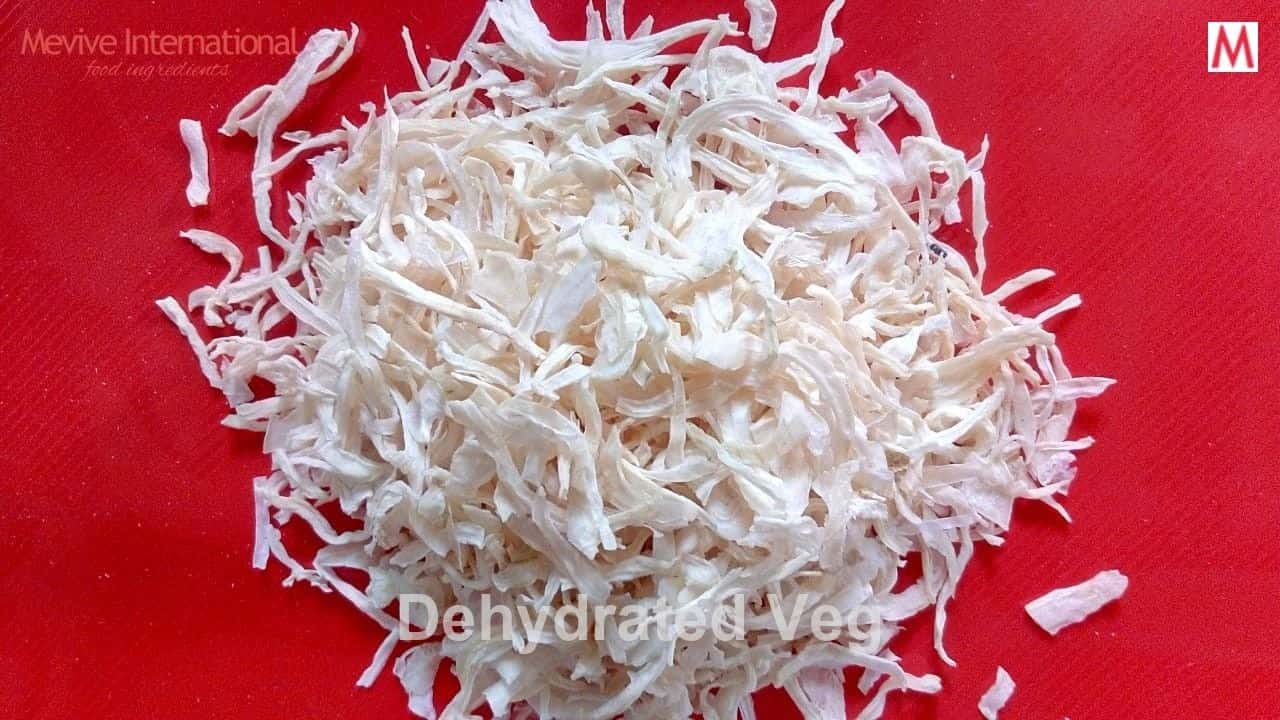
Table of Contents
Dehydrated onion is sold in three common cut sizes — flakes, granules and powder — and the right choice depends on how it will be used in your finished product, not just on price per kilogram. All three come from the same dehydrated onion base; the only difference is the cutting or milling step applied afterward.
Onion Flakes
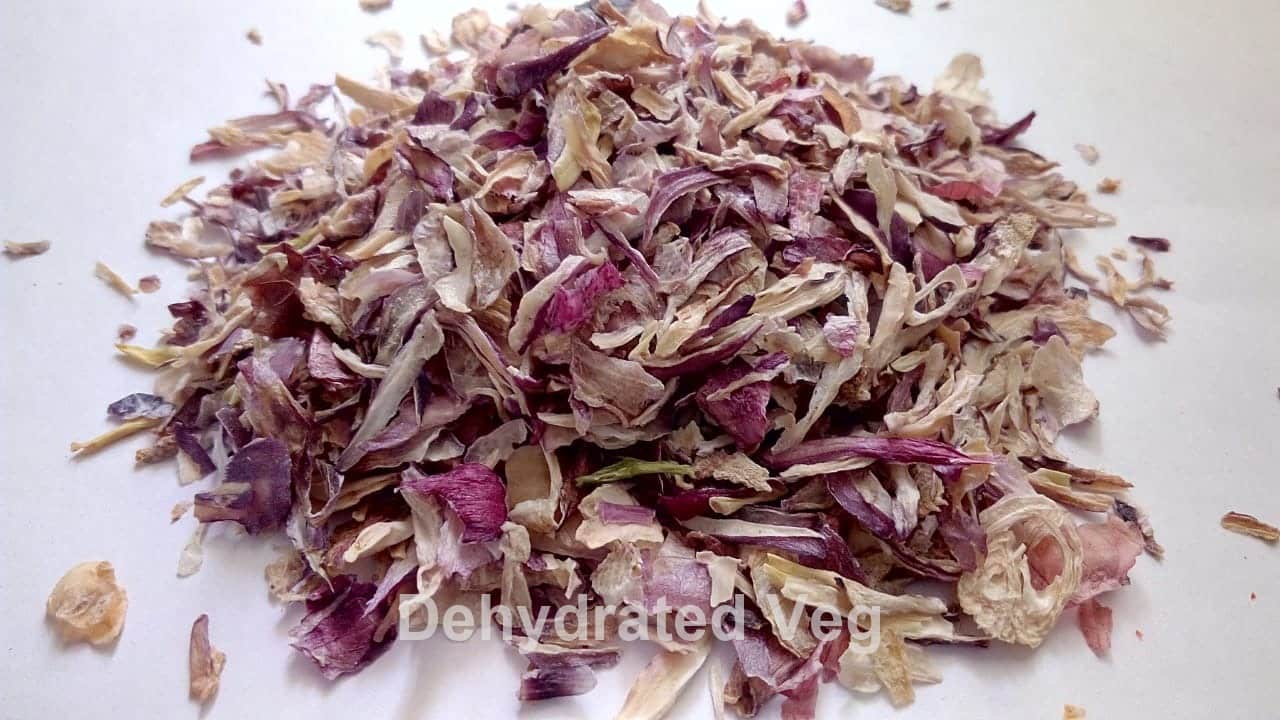
Flakes are the least processed form — larger cut pieces (typically 8-15mm) that retain visible texture. They work well in soups, stews and seasoning blends where a bit of bite or visual texture is wanted in the finished product, and they rehydrate in 10-15 minutes when soaked in warm water.
Onion Granules
Granules are a medium cut (roughly 0.5-1mm), striking a balance between flakes and powder. They’re a common choice for snack coatings and seasoning rubs where a quick rehydration time matters but some texture is still desirable.
Onion Powder
Powder is milled to a fine 80-100 mesh and disperses almost instantly into liquid bases — sauces, gravies, instant soup and noodle premixes, and dry spice blends where an even, smooth distribution of onion flavour is the goal. Because it disperses faster than flakes, formulations built around flakes may need a shorter soak time or less added liquid when switched to powder.
Which Should You Buy?
| Form | Rehydration | Best For |
|---|---|---|
| Flakes | 10-15 min | Soups, stews, visible texture |
| Granules | 5-10 min | Snack seasoning, coatings |
| Powder | Near-instant (dry use) | Sauces, spice blends, instant mixes |
If you’re unsure which cut size suits your production line, request a free sample of all three forms and test them directly in your own formulation before committing to a bulk order.
FAQs
Which onion form has the longest shelf life?
All dehydrated onion forms — flakes, granules and powder — have a comparable 12-month shelf life when stored below 6% moisture in a cool, dry environment, since shelf life is driven by moisture content rather than particle size.
Can I substitute onion powder for flakes in a recipe?
Yes, but you need to adjust for water content and dispersion: powder disperses and rehydrates faster than flakes, so recipes formulated for flakes may need a shorter soak time or less added liquid when switched to powder.
Is onion powder more expensive than flakes?
Powder typically costs slightly more per kg than flakes due to the additional milling step, though the difference is usually small relative to overall ingredient cost.
Do flakes, granules and powder come from the same raw onion?
Yes, all three forms are produced from the same dehydrated onion base; the only difference is the cutting or milling step applied afterward to reach the target particle size.
Related Products
Dehydrated White Onion Flakes
Dehydrated White Onion Flakes (3-5mm) for bulk and export buyers. MOQ 25kg, 12-month shelf life, custom mesh sizes and private label available.
View specifications → Dehydrated Onion Flakes & Powder
Bulk onion flakes & powder from Dehydrated Veg, India. MOQ 25kgs, 12 Months shelf life. Request a free sample or quote.
View specifications →